 Save It
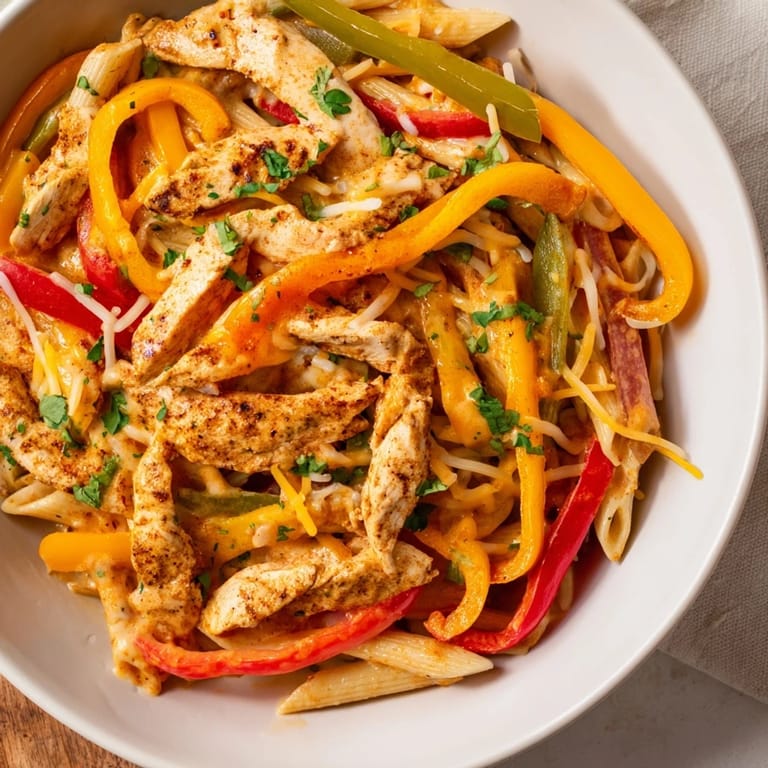
 There's something about the sizzle of chicken hitting a hot skillet that just says dinner is happening, and happening fast. I discovered this one-pan wonder on a Tuesday when I had everything but time, and what started as panic improvisation became my go-to weeknight formula. The moment the cream hits the broth and everything turns into this silky, spiced sauce, you know you've nailed something special. It's not fancy or pretentious, just honest food that tastes like you actually tried.
I made this for my sister's family last summer, and her seven-year-old asked for seconds without being asked, which felt like winning the lottery as a cook. My brother-in-law kept saying it tasted like the fajita place downtown, except better because it was at the dining room table with people he actually liked. That moment sealed it for me—this dish has the power to make a regular Tuesday feel like something worth remembering.
Ingredients
- Chicken breasts: Thin strips cook quickly and evenly, picking up that beautiful golden color that signals everything is going right in the pan.
- Bell peppers (red, yellow, green): The rainbow isn't just pretty; each color brings different sweetness levels and those slightly charred edges add depth that mild flavor alone can't deliver.
- Onion: Gets translucent and sweet when sautéed, binding all the flavors together like an unseen hero.
- Garlic: Minced fine so it doesn't overwhelm and adds that warm, essential savory note that makes people ask what smells so good.
- Penne or rotini pasta: Short shapes hold onto sauce better than long strands, and they finish cooking right when everything else does, which is the real magic here.
- Olive oil: Use good oil; it carries all those spice flavors and makes the vegetables caramelize instead of steam.
- Chicken broth: This is your liquid foundation, so low-sodium matters because you control the seasoning, not the can.
- Heavy cream: Transforms the broth into something rich and velvety without overpowering the fajita seasoning.
- Fajita spice blend: Chili powder, cumin, paprika, oregano, salt, pepper, and cayenne work together to create that recognizable Tex-Mex flavor that makes people come running to the kitchen.
- Cheddar or Monterey Jack cheese: Melts smooth and adds a sharpness that cuts through the cream beautifully.
- Fresh cilantro: Not just garnish—it's the finishing note that says this meal was made with care.
- Lime wedges: A squeeze of bright citrus at the end lifts everything and reminds your palate why this dish works so well.
Tired of Takeout? 🥡
Get 10 meals you can make faster than delivery arrives. Seriously.
One email. No spam. Unsubscribe anytime.
Instructions
- Get your skillet hot and sear the chicken:
- Heat that oil until it shimmers and moves like water, then add your chicken strips in a single layer if you can manage it. You want a good sear, not crowding that translates to steaming. Season with half your spices right into the pan so they bloom in the hot oil and stick to the chicken.
- Build your vegetable base:
- Once the chicken's golden and mostly cooked, push it to the side and use the same oil to get your peppers and onions going. Listen for that sizzle; it tells you the pan is hot enough to get those vegetables slightly charred at the edges. When the garlic goes in and you smell it, you know you're about 30 seconds from magic.
- Bring it all together:
- Return the chicken, add your uncooked pasta straight into the skillet, then pour in the broth and cream. Stir everything so the pasta gets coated and nothing sticks to the bottom. Watch it come to a gentle bubble, then you know the heat is right.
- Let it simmer and finish cooking:
- Cover the skillet and turn the heat down so it's just gently bubbling—not a rolling boil that evaporates all your liquid too fast. Stir it every few minutes so the pasta doesn't clump and everything cooks evenly. You'll know it's ready when the pasta is tender and the liquid has mostly been absorbed into those little pasta tubes.
- Finish with cheese and heat through:
- Sprinkle your cheese over everything, cover again for just two minutes until it melts into a creamy layer. Don't skip this covering step; it creates enough steam to melt the cheese properly instead of just softening it on top.
- Plate and brighten:
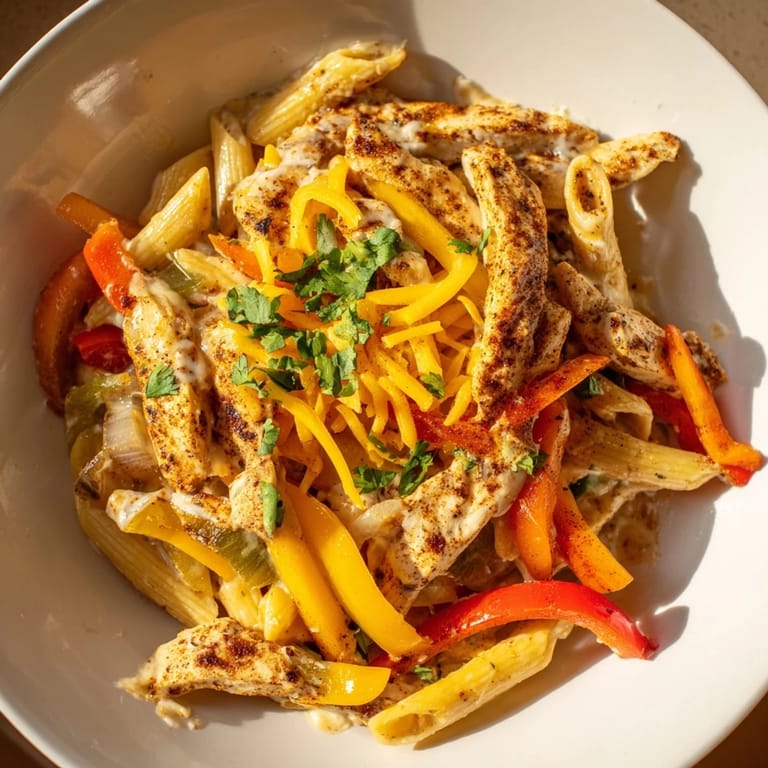
- Sprinkle cilantro over each serving so there are little green flecks in every bite, and set out lime wedges so people can squeeze them over according to their own preference. That brightness at the end is what makes this feel complete.
 Save It
 The real moment I knew this recipe had staying power was when my partner, who usually just eats what I cook without comment, took a bite and said, 'This is the dinner I think about on hard days at work.' That's when you know you've created something that goes beyond nutrition and turns into comfort.
Why This Works as a One-Pan Dinner
There's a reason one-pan meals have become my default: they demand less from you while delivering more. Everything happens in sequence in the same vessel, which means flavors layer and build instead of staying isolated. The chicken oils the pan for the vegetables, the vegetables soften and sweeten, and then everything marinates in that spiced, creamy sauce that wouldn't exist if you'd cooked each component separately. It's less about technique and more about understanding how heat, time, and proximity transform simple things into something cohesive.
The Fajita Seasoning Formula
The genius of fajita seasoning is that it's balanced—smoky from the paprika, warm from the cumin, a little heat from the cayenne, and oregano tying it all together so it doesn't feel chaotic. When you bloom these spices in hot oil before adding liquid, they wake up and distribute throughout the dish instead of sitting on top like afterthought seasoning. I learned this from burning a batch once and realizing that the spices that actually developed flavor were the ones that hit the hot pan first.
Customizing Without Losing the Plot
This recipe is more forgiving than it seems, as long as you understand what each ingredient is doing. Swap the cheese for cotija if you want something sharper, use half-and-half instead of heavy cream if you want it less rich, or add jalapeños if you want more heat. The structure holds even when you adjust, because the foundation is solid.
- Fresh cilantro matters more than you'd think, so don't skip it or substitute it—it's the voice that says this is intentional.
- Lime isn't optional garnish; it's essential seasoning that wakes up every other flavor in the dish.
- Cook the pasta on the pasta's timeline, not the clock—taste it at 12 minutes and adjust from there because pasta brands vary wildly.
 Save It
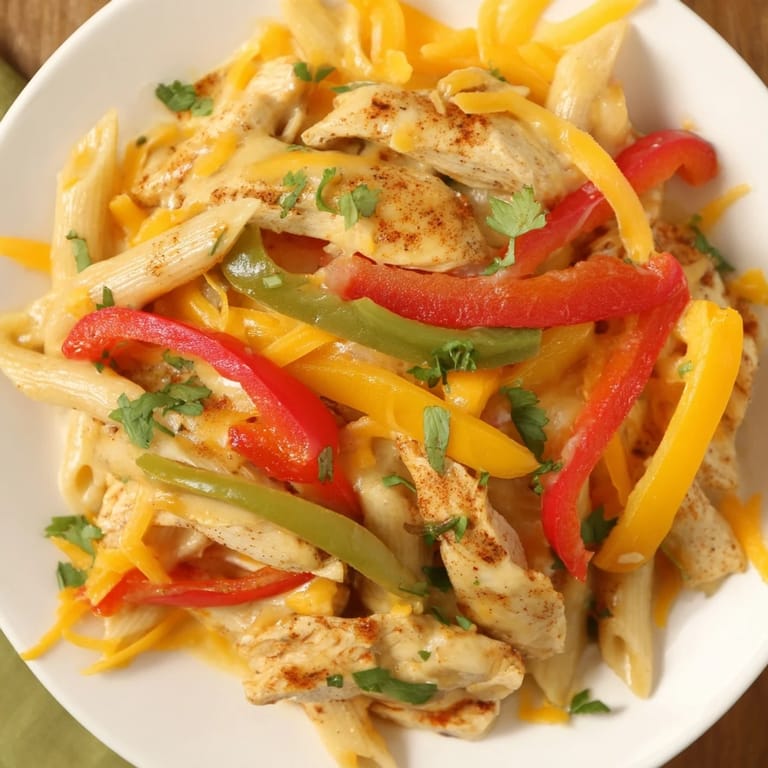
 This dish reminds me that the best meals aren't the ones that require the most ingredients or the fanciest technique—they're the ones that come together on a regular night and make you feel like you did something worth celebrating. Make this for someone you want to impress without trying too hard.
Common Questions About Recipes
- → What type of pasta works best in this skillet?
Penne or rotini hold sauce well and cook evenly in the skillet, making them ideal choices.
- → Can I adjust the spice level of the seasoning?
Yes, omit cayenne or jalapeños for a milder dish, or add more chili powder for extra heat.
- → Is it possible to use a different protein instead of chicken?
Turkey or firm tofu can be substituted, adjusting cooking times accordingly.
- → How do I prevent the pasta from sticking during cooking?
Stir occasionally while simmering and ensure there is enough broth and cream to cook the pasta thoroughly.
- → What garnish pairs well with this skillet?
Fresh cilantro and lime wedges brighten the flavors and add a fresh finish.