 Save It
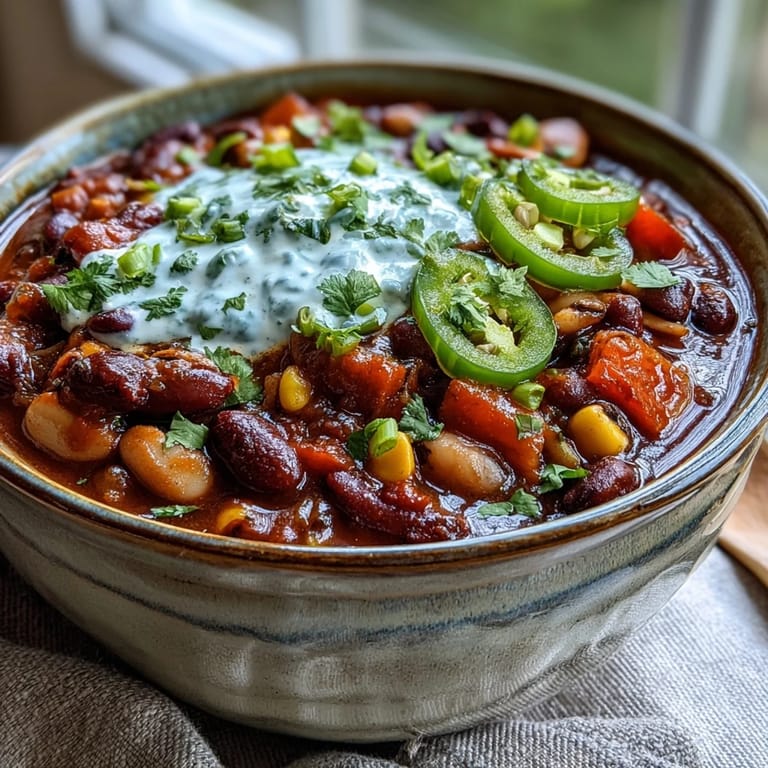
 My neighbor Marcus showed up one October evening with a bag of fresh black-eyed peas from his garden, insisting I try something beyond the traditional Southern preparation I'd grown up with. That night, standing in my kitchen with those humble legumes in hand, I decided to build a chili around them instead, layering in warming spices and roasted vegetables until something unexpected emerged, something that tasted like comfort but felt entirely new to me.
I made this for a potluck at work where everyone brought their signature dish, and I'll admit I was nervous bringing a vegetarian chili to a group of die-hard meat lovers. By the end of the meal, someone asked for the recipe before I'd even cleaned up my serving dish, and I watched two people go back for thirds, which felt like its own kind of victory.
Ingredients
- Black-eyed peas: Use fresh or canned, but if you go canned, really rinse them well to avoid that tinny flavor that sneaks in otherwise.
- Kidney beans: They add substance and help thicken the chili naturally as they break down slightly during cooking.
- Onion, garlic, bell peppers, carrot, celery: This aromatic base is where the real flavor building starts, and don't rush the sauté.
- Diced tomatoes: Canned works beautifully here and honestly tastes more consistent than fresh tomatoes out of season.
- Corn kernels: Fresh is wonderful if you have it, but frozen corn works just as well and sometimes tastes sweeter.
- Vegetable broth: The quality matters more than you'd think, so grab a good brand that you'd actually taste on its own.
- Tomato paste: This concentrates the tomato flavor and adds depth that makes people ask what your secret ingredient is.
- Olive oil: Use extra-virgin for flavor, though a lighter oil works if that's what you have.
- Cumin, chili powder, smoked paprika, oregano, cayenne: These spices are what transform ordinary vegetables into something that warms you from the inside out.
Tired of Takeout? 🥡
Get 10 meals you can make faster than delivery arrives. Seriously.
One email. No spam. Unsubscribe anytime.
Instructions
- Start with the aromatics:
- Heat your olive oil over medium heat and add the onion, garlic, carrot, celery, and both bell peppers, letting them soften together for about 5 to 7 minutes until the kitchen smells impossibly good. You're building a foundation here, so take your time and stir occasionally.
- Wake up the spices:
- Stir in your cumin, chili powder, smoked paprika, oregano, and cayenne, then cook for just one minute until the spices become fragrant and coat all those softened vegetables. This brief cooking step activates the spices and prevents them from tasting raw.
- Deepen with tomato paste:
- Add your tomato paste and stir it into the vegetables for about one minute, letting it caramelize slightly against the heat. This concentrated tomato flavor becomes the backbone of everything that follows.
- Build the chili:
- Pour in your diced tomatoes, vegetable broth, black-eyed peas, kidney beans, and corn, stirring everything together and bringing it to a gentle boil. You'll see the liquid rise and the colors blend into something rich and inviting.
- Let it simmer:
- Drop the heat to low, cover the pot, and let it bubble away gently for 25 to 30 minutes, stirring now and then so nothing sticks to the bottom. This is when the flavors really get to know each other.
- Taste and adjust:
- Before serving, taste your chili and add salt and black pepper until it sings, trusting your palate over any recipe measurement. Everyone's heat tolerance is different, so adjust the cayenne to match yours.
- Serve with style:
- Ladle the hot chili into bowls and let people pile on their favorite toppings, whether that's cilantro, sour cream, jalapeños, or cheese.
 Save It
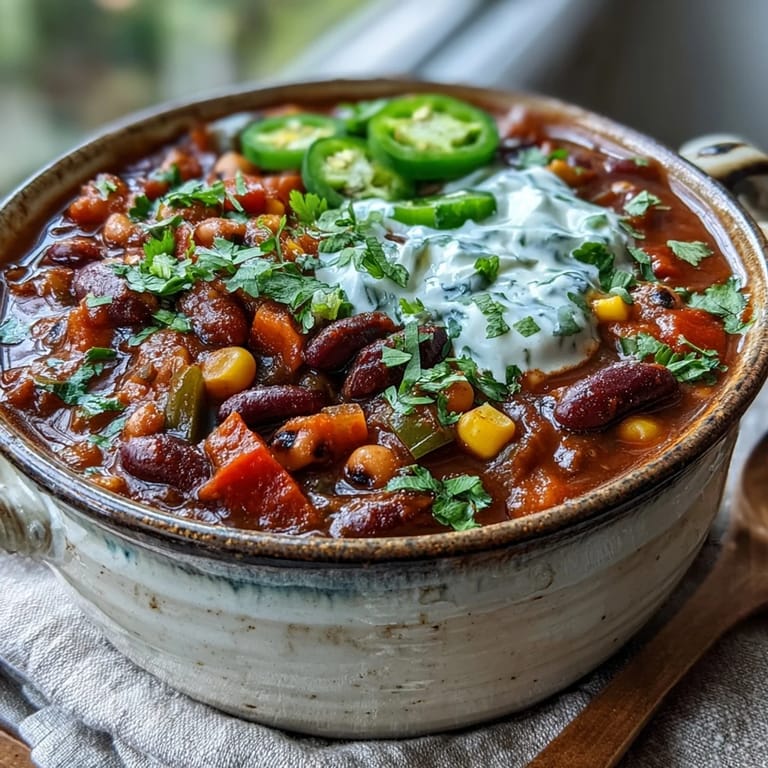
 There's something almost meditative about watching a pot of chili come together, the way the vegetables soften and the beans absorb all those spices until the whole thing becomes greater than its individual parts. My teenage daughter, who usually picks at my cooking, sat at the counter eating spoonfuls straight from a bowl while I was still stirring, which told me everything I needed to know about whether this recipe was worth keeping.
The Magic of Black-Eyed Peas
Most people associate black-eyed peas with Southern holiday cooking, but they deserve to live in your regular rotation, especially in a chili where their creamy texture and subtle earthiness shine differently than kidney or black beans. I used to think they were just traditional, but once I tasted them in this context, I understood they were actually the more interesting choice all along, just waiting for the right dish to prove it.
Customize Without Apology
The beauty of this chili is how forgiving it is, welcoming substitutions and additions like you're cooking for people you know well enough to bend the rules for. I've added diced sweet potato when I had it, swapped in zucchini another time, and once threw in some chipotles in adobo sauce when I wanted more smokiness, and every version tasted like the right choice in that moment.
Serving Suggestions and Storage
This chili tastes even better the next day as the flavors deepen and meld together, making it perfect for meal prep or a lazy weekend when you want something warm without the effort. Serve it over rice, alongside cornbread, with tortilla chips for scooping, or simply in a bowl with your favorite toppings piled high.
- Store leftovers in an airtight container in the refrigerator for up to four days, or freeze for up to three months if you want to save it for later.
- Reheat gently on the stovetop with a splash of broth if it's thickened too much, stirring occasionally so it warms evenly.
- This recipe doubles beautifully if you're feeding a crowd, and it's the kind of dish that actually improves when you make more of it.
 Save It
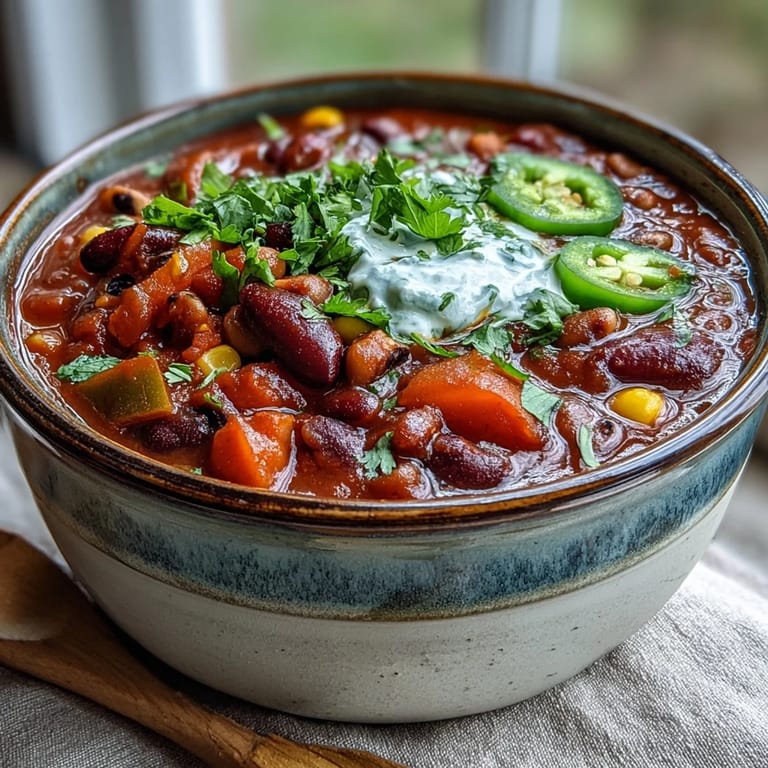
 This chili has become my answer when someone asks what to make for a crowd, when you want comfort food that doesn't apologize, or when you're trying to convince someone that vegetarian cooking is worth their attention. It's one of those recipes that feels like it's been around forever, even though it's only been in my life for a few years.
Common Questions About Recipes
- → Can I use dried black-eyed peas instead of canned?
Yes, soak dried peas overnight and cook until tender before adding to the chili. One cup of dried peas yields about three cups cooked.
- → How can I make this chili thicker?
Mash about one cup of the peas and beans against the side of the pot while simmering. This releases starch and naturally thickens the broth.
- → What other vegetables work well in this chili?
Diced sweet potato, butternut squash, or zucchini make excellent additions. Add them during the simmering stage so they cook through.
- → Can I make this in a slow cooker?
Sauté the vegetables and spices first, then transfer everything to your slow cooker. Cook on low for 6-8 hours or high for 3-4 hours.
- → How long does this chili keep in the refrigerator?
Stored in an airtight container, this chili keeps for up to 5 days. The flavors actually develop and improve after a day or two.
- → Is this chili freezer-friendly?
Absolutely. Cool completely and freeze in portion-sized containers for up to 3 months. Thaw overnight in the refrigerator before reheating.